Lenora's final presentation today was eye-opening for me. I had an epiphany.
Older people think I'm really good at technology. I'm not. I'm just not afraid of it like many of them are.
For example, my last boss and I started Twitter accounts at the same time. Neither one of us had any clue what we were doing, but he just assumed that because I was a twenty-something, I would "get" it and then could teach him. I was fighting off questions about what makes a "good" tweet, how to use a hashtag, and what the heck all the @s were.
Because he was worried about all this stuff, my boss wouldn't try anything. His Twitter account sat stagnant while mine started somehow gaining followers. The difference was that I just tried stuff to see what worked. My strategy with digital writing -- any writing really -- is just to throw everything at the wall and see what sticks.
I think this is a common theme between the generations. Older people that didn't grow up with ridiculous amount of technology are afraid they'll "mess it up" or "break" it, but my generation knows that it can always be wiped and started over.
Showing posts with label writing in the digital age. Show all posts
Showing posts with label writing in the digital age. Show all posts
Thursday, December 12, 2013

Tuesday, December 10, 2013
Professionalism on the Internet
Katharine's final presentation in Writing in the Digital Age focused on professionalism in digital writing. This concept is one that both excites and terrifies me.
I mean, on the one hand, we're more visible than ever before, which means it's easier to connect with others and share our experiences. On the other hand, if an employer deems a topic that we've talked about unsavory, then that can be held against us in the workplace.
I'm not one that does much that anyone would deem inappropriate, but I still think about this stuff. For example, I don't curse on the Internet, I don't talk about alcohol on any of my social media sites, and I don't get political as often as I want to. All for the sake of professional appearance.
A common argument I hear against making these kind of changes is that you don't want to work for someone who would hold those types of things against you anyway, and that's a fairly good argument, but not one that can always be followed. Sometimes, an employer wouldn't want to hold something against you, but it isn't always up to them. Often there are official rules and protocol to follow for the sake of the company at large, and I can appreciate that.
What are your thoughts on professionalism on the Internet?
I mean, on the one hand, we're more visible than ever before, which means it's easier to connect with others and share our experiences. On the other hand, if an employer deems a topic that we've talked about unsavory, then that can be held against us in the workplace.
I'm not one that does much that anyone would deem inappropriate, but I still think about this stuff. For example, I don't curse on the Internet, I don't talk about alcohol on any of my social media sites, and I don't get political as often as I want to. All for the sake of professional appearance.
A common argument I hear against making these kind of changes is that you don't want to work for someone who would hold those types of things against you anyway, and that's a fairly good argument, but not one that can always be followed. Sometimes, an employer wouldn't want to hold something against you, but it isn't always up to them. Often there are official rules and protocol to follow for the sake of the company at large, and I can appreciate that.
What are your thoughts on professionalism on the Internet?
Monday, December 9, 2013
Practicality of Digital Writing
Abby's final presentation for Writing in the Digital Age was a redefined rubric for the class focused more on practicality of projects, and less on the theories and motivations behind digital writings.
While I'm inclined to agree with this sentiment, being a big fan of practicality myself, I enjoyed talking about the theory behind digital communication. I like knowing, or at least thinking about, how and why things work. Plus, the beauty behind so much of what we've been talking about is that it's best figured out by just doing it!
That being said, Abby's presentation was beautifully said and we agreed on a lot of what we liked about the class.
While I'm inclined to agree with this sentiment, being a big fan of practicality myself, I enjoyed talking about the theory behind digital communication. I like knowing, or at least thinking about, how and why things work. Plus, the beauty behind so much of what we've been talking about is that it's best figured out by just doing it!
That being said, Abby's presentation was beautifully said and we agreed on a lot of what we liked about the class.
Twitter as a Discussion Board
It's funny how many of my digital writing classmates's final presentations have featured Twitter. Before this past summer I had only the vaguest ideas about how Twitter was supposed to work, and now I have enough knowledge about it to find myself able to debate about its use in our class and its potential use in future classes.
Marc's comments about live-tweeting a class particularly got me thinking about Twitter and its implications. He suggested that there be one class period held completely on Twitter, with no face-to-face meeting. I think that idea is interesting, but a little overwhelming. I don't like sitting and reading Twitter for long periods of time, and find discussions on the site are often hard to follow. The occasional lag between a point and people's reactions often causes confusion because other comments get thrown in and it's hard to follow who is talking about what.
But it would still be interesting to see, if only to get a feel for how Twitter functions as an actual discussion tool.
Marc's comments about live-tweeting a class particularly got me thinking about Twitter and its implications. He suggested that there be one class period held completely on Twitter, with no face-to-face meeting. I think that idea is interesting, but a little overwhelming. I don't like sitting and reading Twitter for long periods of time, and find discussions on the site are often hard to follow. The occasional lag between a point and people's reactions often causes confusion because other comments get thrown in and it's hard to follow who is talking about what.
But it would still be interesting to see, if only to get a feel for how Twitter functions as an actual discussion tool.
Thursday, October 24, 2013
A BETTER PENCIL Chapter 8: Writing on Screen
This is going to be a review of a chapter of our textbook for my Writing for the Digital Age class. I'm just warning you so if you aren't interested you can just skip this one and come back tomorrow or Saturday for a post about something fun.
Considering the only person who's probably left at this point is Dr. Alberti, I'm just going to write this one for you. Hi, Dr. Alberti!
First off, I'd like to thank you for requiring the Baron book over something else, because I actually find it enjoyable to read. Not only do I not dread my reading for this class, I kind of look forward to it in an ultra-nerdy kind of way.
Now, about chapter 8 specifically, there's a quote near the beginning that I would like to discuss. When talking about computer generated texts, Baron says that their
But when it comes to reading books, and I'm talking traditional paper books here, we're the same way. We are always claiming that literature isn't what it used to be and writers aren't as good as they once were and that pop fiction and fads such as the current zombie craze are going to ruin literature forever. They really aren't. I mean, good stories are good stories, and good writers will always exist to tell those stories, regardless of what's popular at the time. And who's to say that zombie books and paranormal romance are always bad things? Look at Frankenstein and Dracula.
I guess what I'm driving at is that I understand this yearning for the non-existent, "better" past, and I recognize that I'm guilty of those same irrational desires, but that we shouldn't feel this way. New technologies, modes of delivery, and types of writing are not going to ruin literature, reading, and the language as we know it. Change it, yes, but that doesn't necessarily have to be a bad thing.
Considering the only person who's probably left at this point is Dr. Alberti, I'm just going to write this one for you. Hi, Dr. Alberti!
First off, I'd like to thank you for requiring the Baron book over something else, because I actually find it enjoyable to read. Not only do I not dread my reading for this class, I kind of look forward to it in an ultra-nerdy kind of way.
Now, about chapter 8 specifically, there's a quote near the beginning that I would like to discuss. When talking about computer generated texts, Baron says that their
value and reliability go unquestioned by their enthusiastic practitioners, but which prompt serious objections from the vociferous technophobes who still long for an imaginary 'good old days,' a golden age that never really was, when texts were simpler and more reliable.I think this sentiment of non-existent "good old days" is interesting not only in the context of technological texts but also with print texts. We, in general, are mistrusting of new technologies because we get stuck in a rut. We get comfortable with certain ways of doing things, and altering those patterns is hard and kind of scary because there's a potential for things to get worse instead of better.
But when it comes to reading books, and I'm talking traditional paper books here, we're the same way. We are always claiming that literature isn't what it used to be and writers aren't as good as they once were and that pop fiction and fads such as the current zombie craze are going to ruin literature forever. They really aren't. I mean, good stories are good stories, and good writers will always exist to tell those stories, regardless of what's popular at the time. And who's to say that zombie books and paranormal romance are always bad things? Look at Frankenstein and Dracula.
I guess what I'm driving at is that I understand this yearning for the non-existent, "better" past, and I recognize that I'm guilty of those same irrational desires, but that we shouldn't feel this way. New technologies, modes of delivery, and types of writing are not going to ruin literature, reading, and the language as we know it. Change it, yes, but that doesn't necessarily have to be a bad thing.
Friday, October 18, 2013
Performance, Play, and Transmedia Navigation
For my Writing in the Digital Age class, we're reading an article by Henry Jenkins called "Confronting the Challenges of Participatory Culture: Media Education for the 21st Century." The title is quite a mouthful, but the work itself is surprisingly accessible and interesting.
One of the things Jenkins talks about are the "new skills" that we now need in order to function in a media-driven society. Eleven skills are listed, but the three that interest me the most are play, performance, and transmedia navigation. Jenkins definitions for these terms are as follows:
These are interesting to me because I like to have my hands in a lot of different platforms at the same time, and find the differences between different mediums fascinating. I'm particularly fond of examining what makes certain things work versus certain other things on multiple sites.
Lets take, for example, my Twitter feed versus my Facebook profile. Though both are very personal for me -- I don't keep them for work -- they feel quite different. They feel this way because I utilize the performance that Jenkins writes about. I adopt different identities for these two sites, and view this as a kind of play.
Not only this, but I like thinking about the transmedia navigation that Jenkins mentions. Following current events on multiple platforms is an adventure, because each platform highlights different aspects of the same event in a different way. And somehow, I can keep track of all these different feeds seamlessly.
Nobody taught me these skills, but I find Jenkins' proposal to begin teaching these skills intriguing. How would we go about creating classes for these skills? Can we teach these skills, or must one simply be willing to experiment and make mistakes in order to learn how to navigate the various media they come into contact with?
One of the things Jenkins talks about are the "new skills" that we now need in order to function in a media-driven society. Eleven skills are listed, but the three that interest me the most are play, performance, and transmedia navigation. Jenkins definitions for these terms are as follows:
Play — the capacity to experiment with one’s surroundings as a form of problem-solving
Performance — the ability to adopt alternative identities for the purpose of improvisation and discovery
Transmedia Navigation — the ability to follow the flow of stories and information across multiple modalities
These are interesting to me because I like to have my hands in a lot of different platforms at the same time, and find the differences between different mediums fascinating. I'm particularly fond of examining what makes certain things work versus certain other things on multiple sites.
Lets take, for example, my Twitter feed versus my Facebook profile. Though both are very personal for me -- I don't keep them for work -- they feel quite different. They feel this way because I utilize the performance that Jenkins writes about. I adopt different identities for these two sites, and view this as a kind of play.
Not only this, but I like thinking about the transmedia navigation that Jenkins mentions. Following current events on multiple platforms is an adventure, because each platform highlights different aspects of the same event in a different way. And somehow, I can keep track of all these different feeds seamlessly.
Nobody taught me these skills, but I find Jenkins' proposal to begin teaching these skills intriguing. How would we go about creating classes for these skills? Can we teach these skills, or must one simply be willing to experiment and make mistakes in order to learn how to navigate the various media they come into contact with?
Wednesday, October 9, 2013
Technologic Aesthetics
"In an attempt to counteract suspicion, new technologies may mimic the look of older ones in order to gain readers' trust." --Dennis Baron, A Better Pencil.
This quote from our Writing in the Digital Age reading really got me thinking yesterday evening. Why is it that we place so much emphasis on the looks of things in order to evaluate their authenticity? This is true of all people, and not just with technology and writing, but with almost everything in our lives.
We're a prejudiced species, which is neither good nor bad. We have the gift of self-awareness, so of course we're going to have biases that are connected to our thoughts and that will affect our perceptions of the world. These biases come from everywhere -- our upbringing, commercial media, our daily interactions, our past experiences -- and impact every aspect of our lives.
What I'm fascinated with is the impact of our bias on the way we visually perceive things. Things that don't really matter. I can understand biases on physical things. For example, someone who doesn't like big dogs and is afraid of them even before seeing if the dog is nice has a pretty justified reason -- big dogs could potentially hurt you. Even people who judge other people usually have some kind of logic (we won't get into the sense of that right now). But the look of technology? Pure aesthetics? Why does it matter?

When I say it like that, of course it seems silly. If you're anything like me, you're probably saying to yourself "well, it doesn't really matter, as long as functionality isn't an issue." But that's not true. We really do prefer certain aesthetics over others, even when functionality is comparable.
For example, on my Kindle Fire (which I love, and no, Amazon doesn't pay me to say that) some books get distorted because the publisher/self-publisher/whatever didn't do a great job formatting the text for e-book. That shouldn't reflect on my perception of the text, but it does, because I'm used to neat, orderly books. Forget the fact that I'm aware why the formatting problems happen and that my logical brain knows it makes no difference to the words themselves, my bias makes me want to put the book down or dismiss anything it says as untrustworthy.
What are your thoughts on aesthetics in writing and technology? What are some of your biases? I'd love to hear your stories in the comments!
 |
| Image from Goodreads.com |
This quote from our Writing in the Digital Age reading really got me thinking yesterday evening. Why is it that we place so much emphasis on the looks of things in order to evaluate their authenticity? This is true of all people, and not just with technology and writing, but with almost everything in our lives.
We're a prejudiced species, which is neither good nor bad. We have the gift of self-awareness, so of course we're going to have biases that are connected to our thoughts and that will affect our perceptions of the world. These biases come from everywhere -- our upbringing, commercial media, our daily interactions, our past experiences -- and impact every aspect of our lives.
What I'm fascinated with is the impact of our bias on the way we visually perceive things. Things that don't really matter. I can understand biases on physical things. For example, someone who doesn't like big dogs and is afraid of them even before seeing if the dog is nice has a pretty justified reason -- big dogs could potentially hurt you. Even people who judge other people usually have some kind of logic (we won't get into the sense of that right now). But the look of technology? Pure aesthetics? Why does it matter?
When I say it like that, of course it seems silly. If you're anything like me, you're probably saying to yourself "well, it doesn't really matter, as long as functionality isn't an issue." But that's not true. We really do prefer certain aesthetics over others, even when functionality is comparable.
For example, on my Kindle Fire (which I love, and no, Amazon doesn't pay me to say that) some books get distorted because the publisher/self-publisher/whatever didn't do a great job formatting the text for e-book. That shouldn't reflect on my perception of the text, but it does, because I'm used to neat, orderly books. Forget the fact that I'm aware why the formatting problems happen and that my logical brain knows it makes no difference to the words themselves, my bias makes me want to put the book down or dismiss anything it says as untrustworthy.
What are your thoughts on aesthetics in writing and technology? What are some of your biases? I'd love to hear your stories in the comments!
Monday, September 30, 2013
To My Class
Dear Writing in the Digital Age Class,
You all are the best.
Ever since my presentation on Thursday, I have been receiving lots of tweets and some blogs about yarn, knitting, and social interaction. I haven't gotten the chance to catch up on everybody's blogs yet (my bridal shower was this weekend), but know that I'm looking forward to seeing what everyone has to say.
Thank you for being so attentive during my presentation and humoring my unhealthy passion for yarn-y things. I'm sure I came across like the Helvetica guys in the video we watched, but hey, passion is a good thing.
And thank you all for your tweets. Each and every one that has been sent my way has made me really happy. I'm so glad our class is together.
Love,
Autumn
You all are the best.
Ever since my presentation on Thursday, I have been receiving lots of tweets and some blogs about yarn, knitting, and social interaction. I haven't gotten the chance to catch up on everybody's blogs yet (my bridal shower was this weekend), but know that I'm looking forward to seeing what everyone has to say.
Thank you for being so attentive during my presentation and humoring my unhealthy passion for yarn-y things. I'm sure I came across like the Helvetica guys in the video we watched, but hey, passion is a good thing.
And thank you all for your tweets. Each and every one that has been sent my way has made me really happy. I'm so glad our class is together.
Love,
Autumn
Monday, September 23, 2013
My Notebook Collection
Sometimes I miss writing things by hand. Reading A Better Pencil's chapters on handwriting and writing on clay tablets has made me nostalgic for how I used to run my writing life.
At my apartment, I have an entire shelf of notebooks full of the stories I would write in middle and high school. I usually got done with assignements early in class, so I had plenty of free time during the school day to fiddle around with my ideas.
When college started, I didn't have any time during class to work on my writing and I wrote on the computer when I was in my dorm. It was faster and easier on my hands with the additional benefit of not taking up as much precious room as multiple notebooks.
But now that I have some space once again, I've found that I really like having those notebooks. They give me a bigger sense of accomplishment than the works stored on my computer. When I'm having a rough day or just need a bit of a boost, I can look at my bookshelf and feel validated by the volume of work readily apparent.
But why is that? Why does my physical paper feel any more real than my virtual paper? There's no real difference. They're both just spaces filled with words.
I'm interested to hear your thoughts. Do you feel like you've done more when you handwrite something versus type something? Why do you think people view handwriting and typing differently in the first place?
 |
| This was my favorite notebook in high school. |
When college started, I didn't have any time during class to work on my writing and I wrote on the computer when I was in my dorm. It was faster and easier on my hands with the additional benefit of not taking up as much precious room as multiple notebooks.
 |
| I didn't believe in right hand margins back then. |
But why is that? Why does my physical paper feel any more real than my virtual paper? There's no real difference. They're both just spaces filled with words.
I'm interested to hear your thoughts. Do you feel like you've done more when you handwrite something versus type something? Why do you think people view handwriting and typing differently in the first place?
 |
| So many notebooks! And a Kindle. |
Monday, September 2, 2013
Explanation in the Digital Age
My classes are already starting to blur together. It happens to me every semester, but usually not until after midterms. I think it's because almost all my classes are writing based -- so they just feed off each other. Currently, I'm working on an assignment for my technical writing class in which I examine a piece of technical writing and perform a rhetorical analysis on it. Part of the assignment is to analyze and critique the author's ability to provide enough background knowledge for the reader to follow along (if applicable).


Now, because I'm also taking Writing for the Digital Age, my brain is constantly picking apart current communications. That's when I got to thinking about the necessity for technical writers to provide background information. In our Google age, is there a point to explaining jargon and other highly specific information in every case?
Let's take, for example, a knitting pattern.
Above is Robin Ulrich's "Greyhaven Cowl" (Ravelry link for those interested: http://www.ravelry.com/patterns/library/greyhaven-cowl).
I've been pining after the Greyhaven Cowl for a while, and finally broke down and bought the pattern. I haven't begun knitting yet, but a preliminary glance has got me feeling pretty good. The pattern is neatly organized, there are charted and written instructions, and repeats are even color coded. It even includes instructions for binding off and blocking, which is above and beyond the call of duty.
But, as nice as all that effort on the designers part is, I don't think she needed to do all of that. I wouldn't have blamed her for a second if she just charted out the pattern and didn't write it as well, because if I didn't already know how to read a chart, I could just Google it. Same for blocking and binding off. The information is already out there and readily available.
What is our responsibility to explain processes or jargon that's easily looked up by those who don't know the information already? I'd love to see what you think in the comments.
Also, on an only semi-related note, I think I'm going to make these socks for myself. They're just too cool.
They are Claire Ellen's "Pippin Socks" (http://www.ravelry.com/patterns/library/pippin-socks).
Saturday, August 31, 2013
TeknoFear
I just finished reading Chapter 2 of Dennis Baron's A Better Pencil, and I must say, I don't really get it. He's talking about people who fear or have feared technology, but I just can't wrap my head around that concept.
Though there are aspects of technology that frighten me (I'm looking at you phone that's always telling people where I am), overall I'm excited about technology. I think exploring new ways of doing things and communicating is endlessly fascinating and fun. Technology is a tool, and it's up to us to wield it responsibly.
One of Baron's comment about the Unabomber stuck out to me: "The unstoppable Frankenstein or Terminator notwithstanding, we will always have more to fear from the all-too-real, all-too-crazed kitchen bomb makers than from the imaginary cyborgs whose deadliness is the product of Hollywood dream factory computers." People are the scary ones -- not technology.

Ted Kaczynski, the Unabomber
(photo credit: commons.wikimedia.org)
Though there are aspects of technology that frighten me (I'm looking at you phone that's always telling people where I am), overall I'm excited about technology. I think exploring new ways of doing things and communicating is endlessly fascinating and fun. Technology is a tool, and it's up to us to wield it responsibly.
One of Baron's comment about the Unabomber stuck out to me: "The unstoppable Frankenstein or Terminator notwithstanding, we will always have more to fear from the all-too-real, all-too-crazed kitchen bomb makers than from the imaginary cyborgs whose deadliness is the product of Hollywood dream factory computers." People are the scary ones -- not technology.
Ted Kaczynski, the Unabomber
(photo credit: commons.wikimedia.org)

Friday, August 30, 2013
Information Overload
I am uncomfortably aware of my mortality lately. I've always been pretty ok with the notion that I'm going to die, since all things must run their course, but now I'm kind of scared. What if I miss something?
You see, I'm completely overwhelmed by the knowledge that, before I die, I won't get to experience everything that I want to. I will never be able to read all the books that I want, to write all the stories that I want, to knit everything that I want, or even to look at as many funny pictures as I want.
 ugly-sweater.blogspot.com
We are living in a world of fantastic content, and it's simply too much.
This post was sparked by chapter 6 of Beyond Literacy, "Information Overload" (http://www.beyondliteracy.com/information-overload/). I was drawn to the chapter because I've been thinking about this issue a lot, and it certainly confirmed my thoughts. It seems as if I'm not the only one noticing the onslaught of information, and having trouble synthesizing all of it.
I think synthesis is the root of the problem. If I could simply experience the content and then let it go, things would be fine, but I can't do that. I want to make connections, to link anything and everything in some way. It makes my heart happy to draw ideas out of other ideas. But I think if my heart has any more stimulation, it's going to explode.
Here's another funny picture, just to end on a nice note. (If you get this, we should talk and be friends.)
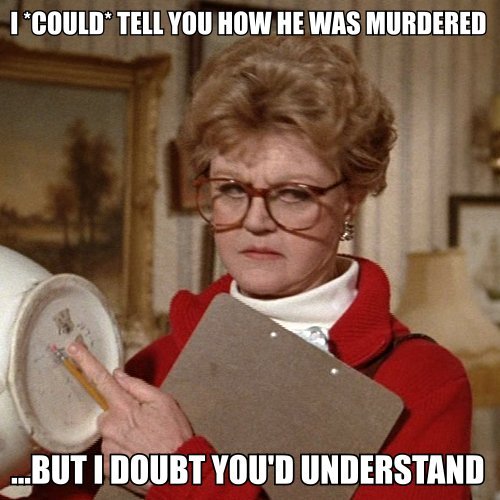
fuckyeahmurdershewrote.tumblr.com
You see, I'm completely overwhelmed by the knowledge that, before I die, I won't get to experience everything that I want to. I will never be able to read all the books that I want, to write all the stories that I want, to knit everything that I want, or even to look at as many funny pictures as I want.
ugly-sweater.blogspot.comWe are living in a world of fantastic content, and it's simply too much.
This post was sparked by chapter 6 of Beyond Literacy, "Information Overload" (http://www.beyondliteracy.com/information-overload/). I was drawn to the chapter because I've been thinking about this issue a lot, and it certainly confirmed my thoughts. It seems as if I'm not the only one noticing the onslaught of information, and having trouble synthesizing all of it.
I think synthesis is the root of the problem. If I could simply experience the content and then let it go, things would be fine, but I can't do that. I want to make connections, to link anything and everything in some way. It makes my heart happy to draw ideas out of other ideas. But I think if my heart has any more stimulation, it's going to explode.
Here's another funny picture, just to end on a nice note. (If you get this, we should talk and be friends.)
fuckyeahmurdershewrote.tumblr.com
Wednesday, August 28, 2013
Post-Literacy
I'm taking a class called Writing in the Digital Age, so over the next couple months, many of my posts are going to be related to that reading, writing, literacy, and what they mean for us as a society.
To start, I'd like to discuss our latest assignment, which was to watch this video: http://youtu.be/l_b-v8e3urQ
and poke through the corresponding website: http://www.beyondliteracy.com/about-beyond-literacy/.
If you don't want to go digging through those yourself, basically it's exploring the idea of humanity moving beyond literacy, and what that would mean. So, what would happen if we moved past language as we know it and into something more efficient? Would post-literacy also mean post-human?
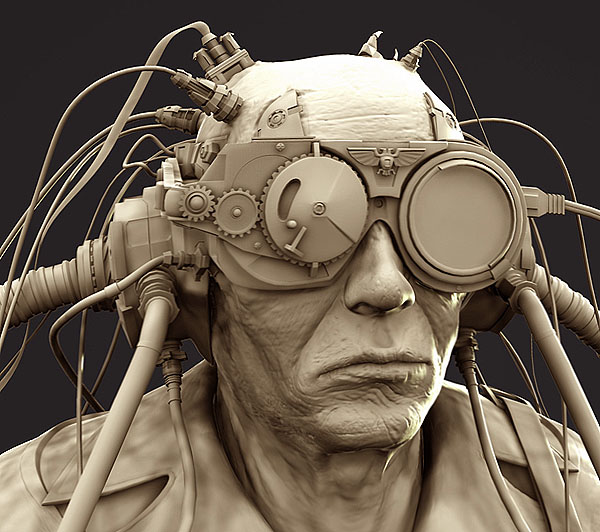
(photo from compthink.wordpress.com)
Honestly, I have trouble even wrapping my mind around the concept. Literacy is an enormous part of my life -- many things I do are literary in a traditional sense, with a pen and paper, and many more are literary in our digital age. I can't imagine anything "beyond" language, because my entire sense of self is wrapped up in language.
If we did move on to some sort of post-literate form of communication, I think there's a strong possibility we'd be post-human. That is, we would be a melding of human and machine, rather than just the people we are now. It's already something we can think about, with the way we can access the work and ideas of people long dead. They're no longer people in the sense of being able to interact, but we still think of those who are gone as people. They're post-human.
If we did move on to become post-human, we could facilitate a sort of hive-mind communication that could transmit a post-literate form of communication. The only thing I can wrap my mind around is the direct transmission of thoughts, images, and feelings -- which we just can't do. We would have to convert to machinery, in some form or fashion, to achieve this.
The whole idea is frightening in its scope and implications.
To start, I'd like to discuss our latest assignment, which was to watch this video: http://youtu.be/l_b-v8e3urQ
and poke through the corresponding website: http://www.beyondliteracy.com/about-beyond-literacy/.
If you don't want to go digging through those yourself, basically it's exploring the idea of humanity moving beyond literacy, and what that would mean. So, what would happen if we moved past language as we know it and into something more efficient? Would post-literacy also mean post-human?
(photo from compthink.wordpress.com)
Honestly, I have trouble even wrapping my mind around the concept. Literacy is an enormous part of my life -- many things I do are literary in a traditional sense, with a pen and paper, and many more are literary in our digital age. I can't imagine anything "beyond" language, because my entire sense of self is wrapped up in language.
If we did move on to some sort of post-literate form of communication, I think there's a strong possibility we'd be post-human. That is, we would be a melding of human and machine, rather than just the people we are now. It's already something we can think about, with the way we can access the work and ideas of people long dead. They're no longer people in the sense of being able to interact, but we still think of those who are gone as people. They're post-human.
If we did move on to become post-human, we could facilitate a sort of hive-mind communication that could transmit a post-literate form of communication. The only thing I can wrap my mind around is the direct transmission of thoughts, images, and feelings -- which we just can't do. We would have to convert to machinery, in some form or fashion, to achieve this.
The whole idea is frightening in its scope and implications.
Friday, August 23, 2013
BioShock
I recently played BioShock, and ever since, it's all I can think about. Never before have I experienced a game that sucked me in quite like it did, and never before have I loved spending all my time doing just one thing more. I'd like to work through my BioShock experience in order to analyze what makes it so special, and there will be spoilers, so consider yourself warned.
I know I'm late to the game, but I was hesitant to play BioShock because it looked scary. All I'd ever seen were the Little Sisters, and I don't care who you are, those girls are creepy.
See my point?
But I listened to the Nerdist podcast featuring Ken Levine, the creative director of the BioShock enterprise, and was blown away by what he had to say about story. I stopped listening about 20 minutes in so I could stem the tide of spoilers I was hearing about Infinite, and decided to start from the beginning.
I knew nothing about BioShock's gameplay, and was disappointed when I discovered it was a first-person shooter. I suck at first-person shooters. Luckily for me, easy mode is quite forgiving, and the mechanics didn't get in the way of my enjoyment of the experience. In fact, I think the full immersion that the first-person perspective provides helps make the game as exciting as it is. Everything is scarier when it's running at you rather than some guy, and having to manipulate the camera almost constantly in order to see everything around me kept me active and engaged during every moment of play.
Part of the reason I love BioShock as much as I do is because the game rewards you for engaging with your environment. Sure, you could move through the game fairly quickly without exploring much, especially on easy mode, but you would miss most of the story.
The joy of BioShock comes from taking an active role in discovering the story. You start with no knowledge of the world you are in or yourself, but discover it in bits and pieces along the way through radio transmissions with Atlas, one of the survivors in the city, and by finding audio logs, voice recordings left scattered through Rapture by its residents that act much like journals. Because these audio logs are scattered and somewhat hidden throughout the city, you have control over how much story you receive.
 |
| bioshock.wikia.com |

I know I'm late to the game, but I was hesitant to play BioShock because it looked scary. All I'd ever seen were the Little Sisters, and I don't care who you are, those girls are creepy.
 |
| strangegaming.blogspot.com |
See my point?
But I listened to the Nerdist podcast featuring Ken Levine, the creative director of the BioShock enterprise, and was blown away by what he had to say about story. I stopped listening about 20 minutes in so I could stem the tide of spoilers I was hearing about Infinite, and decided to start from the beginning.
I knew nothing about BioShock's gameplay, and was disappointed when I discovered it was a first-person shooter. I suck at first-person shooters. Luckily for me, easy mode is quite forgiving, and the mechanics didn't get in the way of my enjoyment of the experience. In fact, I think the full immersion that the first-person perspective provides helps make the game as exciting as it is. Everything is scarier when it's running at you rather than some guy, and having to manipulate the camera almost constantly in order to see everything around me kept me active and engaged during every moment of play.
Part of the reason I love BioShock as much as I do is because the game rewards you for engaging with your environment. Sure, you could move through the game fairly quickly without exploring much, especially on easy mode, but you would miss most of the story.
The joy of BioShock comes from taking an active role in discovering the story. You start with no knowledge of the world you are in or yourself, but discover it in bits and pieces along the way through radio transmissions with Atlas, one of the survivors in the city, and by finding audio logs, voice recordings left scattered through Rapture by its residents that act much like journals. Because these audio logs are scattered and somewhat hidden throughout the city, you have control over how much story you receive.
 |
| randomintermissions.wordpress.com |
The audio logs are usually in rooms that aren't involved with the main story line, so I quickly developed the habit of looking at which way the plot arrow was pointing on screen, and heading off in the complete opposite direction. This gave me more time in the world of Rapture, and exposed me to many details I would have otherwise missed.
The audio logs also kept the game from feelings stale, because they offered so many different viewpoints on Rapture and the events that went on there, and gave characters who wouldn't have otherwise existed a voice. It was fascinating to me to see what each person chose to focus on in the chaos of Rapture's demise, and how this focus would change in different parts of the city.
In addition to the audio logs, I think what makes BioShock's story so special is the deliciously meta twist when you discover you are playing a brain-washed pawn in the Ryan/Fontaine drama. The reveal that Ryan is your father and he turned you into an unthinking slave as a child is disturbing, unexpected, and makes perfect sense once it is out in the open. Of course Atlas, who is really Fontaine, has been controlling you the entire time! Why else would you be there, killing Ryan? Everything you've done to that point has been part of some grand scheme you have no control of.
 |
| www.henrycountyr1.k12.mo.us |
This reveal calls into question the nature of gaming, of life, and of the nature of humanity itself. It may just be me, but the "a man chooses, a slave obeys" point that Ryan makes hit me deeply. My mind can't stop turning the concept over and over, applying it to my life, and to everything I do. That's the mark of a great story. And I don't think the message would have been as powerful in any other medium, or if the story had been told in any other way.
Subscribe to:
Posts (Atom)